Explainer
What Is the Window Peeper Trend? How Caught at the Window Started
The Window Peeper trend is the caught-mid-snack window joke. Follow its October 2026 timeline and learn what makes the curtain ending work.
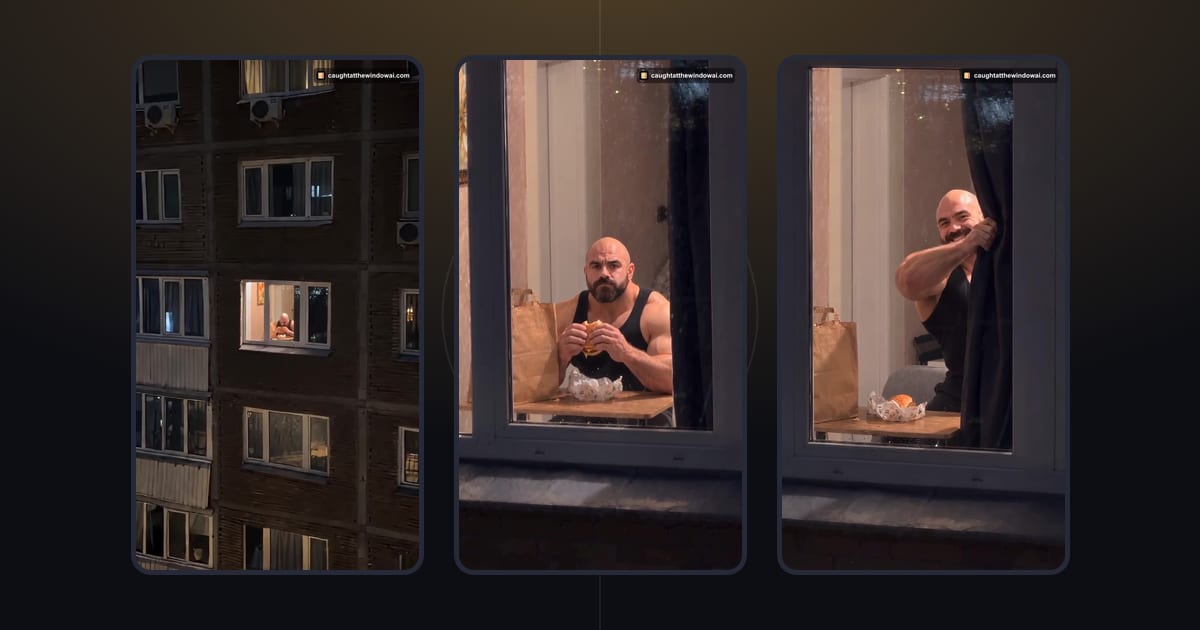
The Window Peeper trend is an AI video joke in which a nighttime view moves toward a lit window, catches someone eating and ends with that person closing the curtain. Also called the Caught at the Window trend, it turns a tiny guilty-snack moment into a visual punchline. The part you recognize is the sequence: snack, eye contact, curtain.
If you already know the joke, Caught at the Window AI gives you a place to start with your own photo. If you want the context first, the useful story is how an advertising scene became a personal video format across different platforms and languages.
What happens in a Window Peeper video?
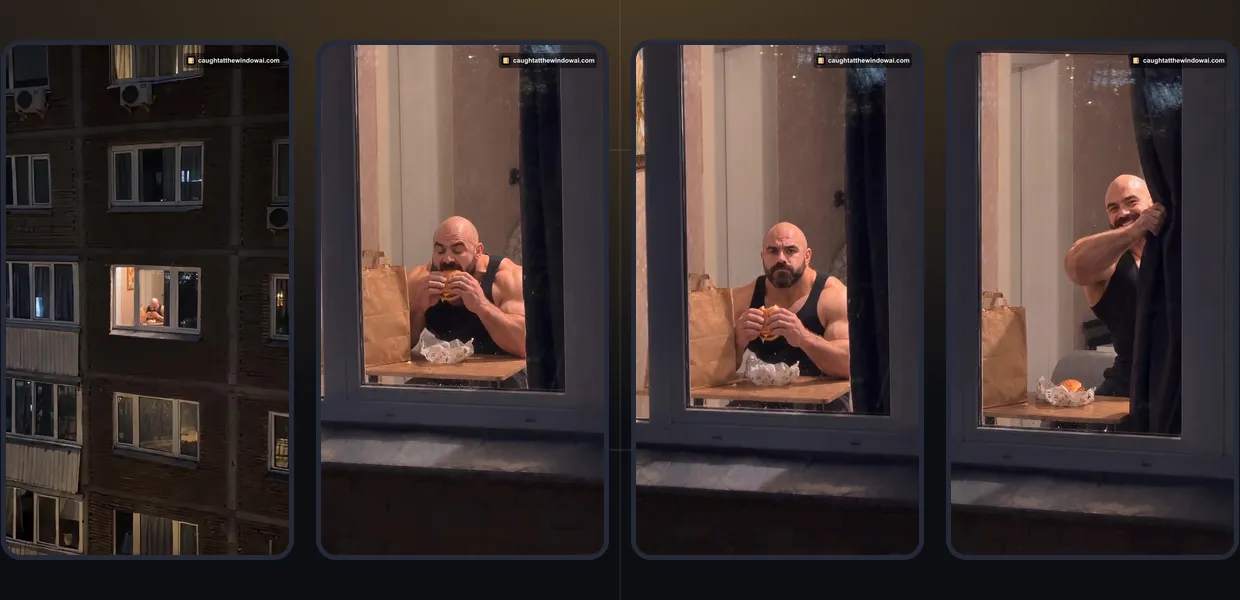
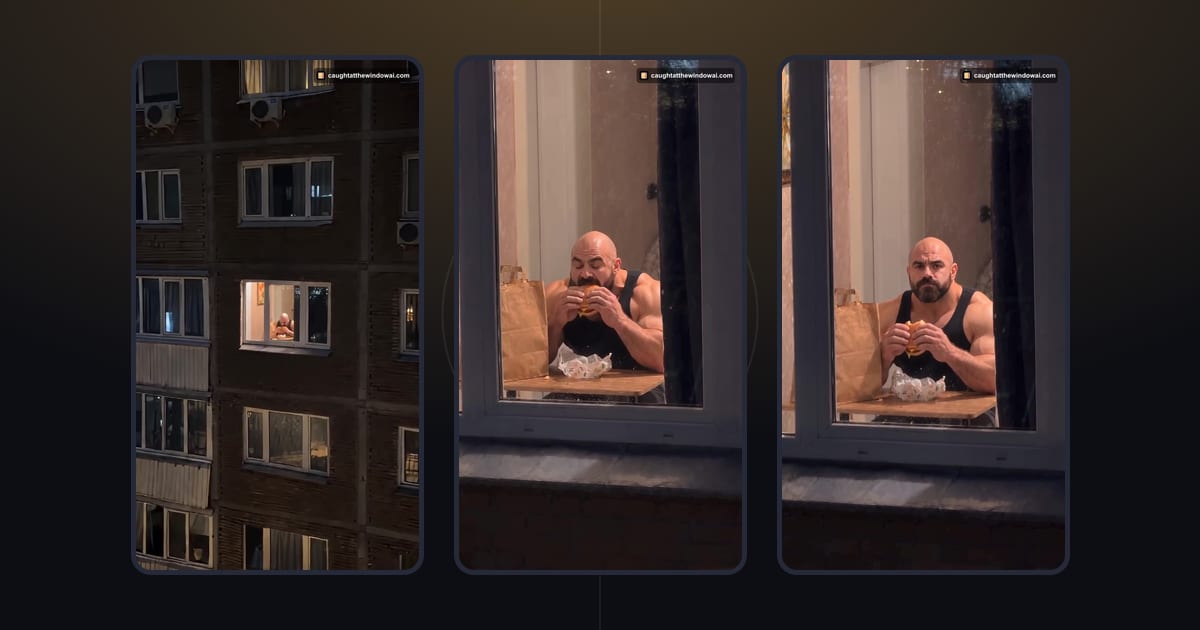
A bright window draws your attention against a dark building. As the view gets closer, the person inside is occupied with food. Then attention changes direction: they look toward the camera, pause and pull the curtain across the window. The ending works because the curtain is a visible response to being caught mid-bite.
That is enough of a story to understand without a long caption. There is a setup, a discovery and a reaction. The snack makes the situation ordinary; the decisive curtain closure makes it funny. A dramatic explanation of who lives in the building would add little. The viewer mainly needs to see what the person was doing before they noticed the camera.
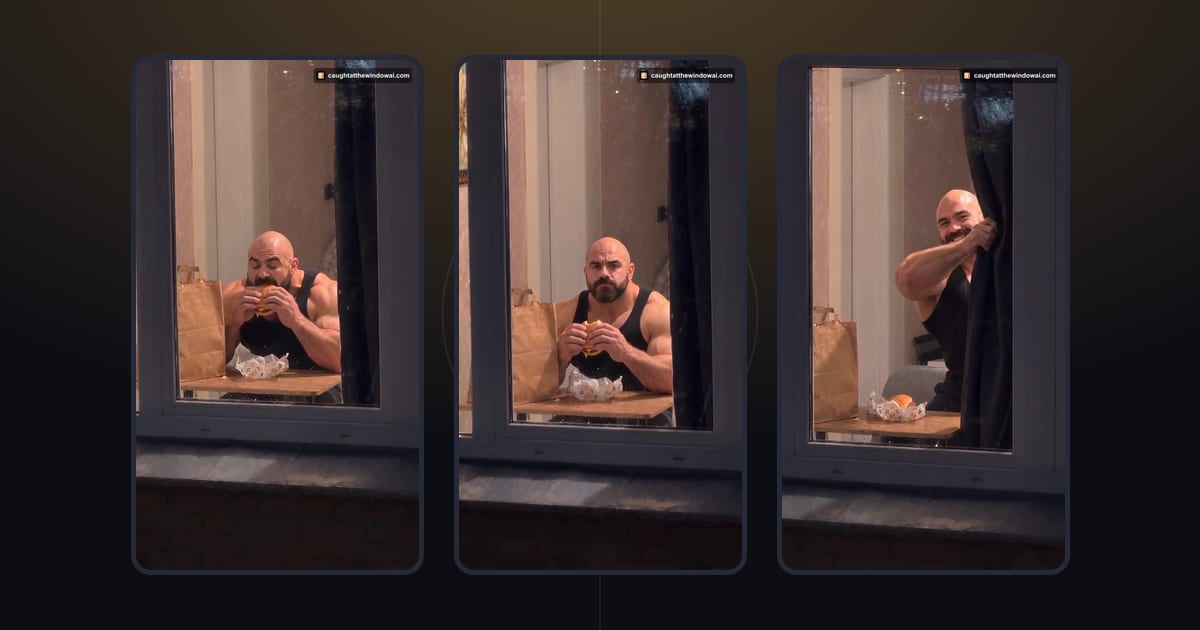
The frames below come from our generated example, made with a fictional adult photo. Follow the same person from the lit window to the snack, the glance toward the camera and the curtain close. This completed example makes the sequence easy to compare with the four story beats described here.
Where the Caught at the Window trend came from
The timeline below records four identifiable milestones from October 2026. It describes what our research could establish, rather than claiming that one post was the first window joke ever made. Social formats can circulate in several places before their best-known name appears.
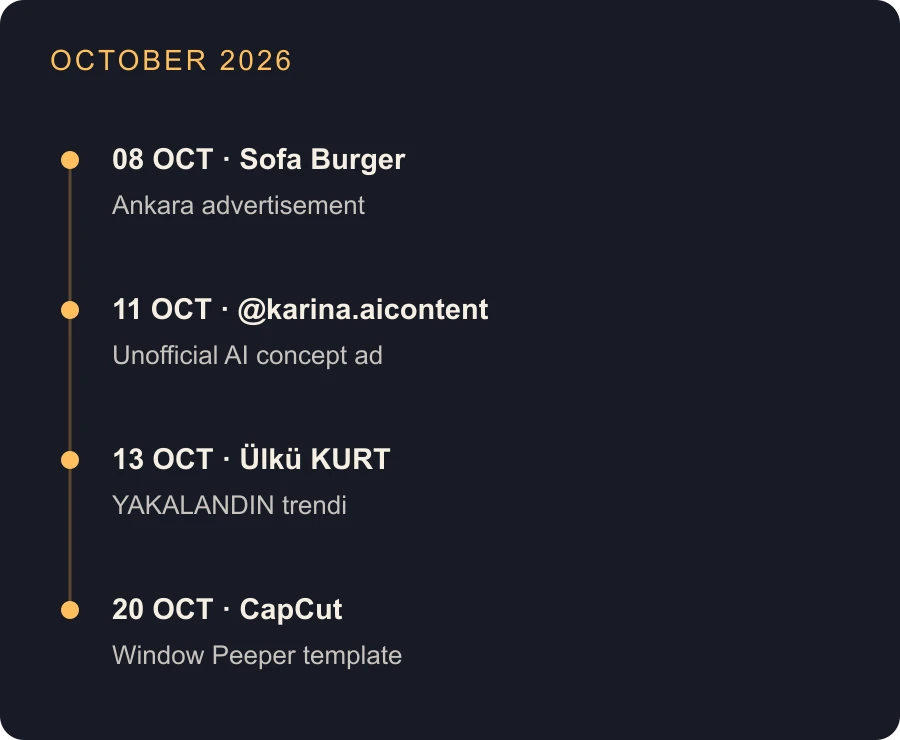
On 8 October 2026, Sofa Burger in Ankara published the advertisement that is the earliest version identified in our research. The scene connects a burger, a lit window and the reaction of closing the curtain. The Sofa Burger Instagram post is the source for that milestone. A food advertisement is the starting context here; it does not mean every later personal version is an advertisement.
On 11 October, @karina.aicontent published an AI concept advertisement on Instagram. The creator described it as an unofficial portfolio concept for FARШ. That distinction matters when reading the history: a creator's concept is not evidence of a commissioned campaign or brand endorsement. The milestone comes from the creator's Instagram post, without adopting unverified claims about the model used or the number of views.
On 13 October, Turkish creator Ülkü KURT used the name YAKALANDIN trendi and shared prompt-related content. The phrase conveys the feeling of “you got caught,” which fits the snack interruption neatly. The Instagram post helps explain why Turkish searches often use Yakalandın while English searches use Window Peeper.
From 20 October, the format spread as a one-photo CapCut template on TikTok under the name Window Peeper. The CapCut template page is the reference for this part of the timeline. Template use counts change, so they are not needed to explain how the format works or to decide whether you want to make a version.
Why the same joke has several names
“Window Peeper” is useful when searching for the template-associated version. “Caught at the Window” describes the scene from the perspective of the person interrupted. In Turkish, “YAKALANDIN” puts the emphasis on the reaction. In Spanish discussions, the English name can appear alongside descriptions such as being caught at the window with AI.
These labels overlap, but a search result may offer a different workflow. One page may teach a general prompt, another may link to an editing template, and another may accept a photo directly. Check what the page actually asks you to provide. A familiar trend name alone does not tell you the price, supported controls or output options of every service using that name.
You may also encounter burger thru window or caught eating meme while exploring related posts. They point toward the food-and-window joke. They are not a promise that every tool offers selectable meals, different interiors or a custom advertising scene. For this site, the focus is a personal AI video using a prepared window scene.
Why the curtain ending is the important part
The scene depends on a change in attention. If the person looks toward the camera from the beginning, the interruption is less obvious. If the curtain closes before the look, the reaction can feel disconnected. Read the sequence as a small piece of visual comedy: establish the snack, let the discovery land, then end it.
The contrast between a dark exterior and a warm window also gives the viewer a clear place to look. You do not need a busy background to make the moment understandable. The small rectangle of light already acts as a stage. This is a way to analyze the trend's visual structure, not a guarantee about how any individual AI generation will turn out.
How to join with your own photo
The personal version is most direct when the person caught eating is you. Choose a clear photo with your face visible, then use Caught at the Window AI to open the prepared-scene workflow. You can use an authorized adult's photo too; the upload form explains the permission requirements before submission.
You do not need to recreate the original creator's post or find its source file. On this site, generative video AI uses your photo and a prepared scene. The step-by-step Window Peeper guide explains photo selection, the article's upload form and the return after signing in or buying credits. For a creative breakdown, read the Caught at the Window prompt guide.
Join the trend with your photo
Keep the joke personal when you write the caption. “Me after saying I wasn't hungry” creates a recognizable situation without claiming that a fictional event happened. A late work snack or a match-night appetite can provide the caption's context; these are ideas for the accompanying text, not extra scene options in the generator.
What to check before you create and share
Start with the number of videos you actually want. Credit packs are one-time purchases, with no subscription or automatic renewal. Each video uses 10 credits, and packs start at $8.90. Check the pricing page for the current pack contents before paying. Failed or timed-out generation returns the credits automatically; that is separate from the policy for refunding unused purchased credits.
The refund policy explains the 7-day window for unused credits. A delivered video counts as used. Download a result you want to keep within the 30-day availability period. Uploaded photos are deleted 24 hours after completion or failure. These conditions help you choose a pack and plan your download without relying on a claim about rendering speed.
Before posting, watch the full result and check that its visual joke is clear. Identify it as AI-generated in your caption and use the platform's AI-content label where available. The generated video keeps the scene's audio, including the laughter at the end. If you add another track, choose a source you are entitled to use.
When you are ready to put yourself at the window, open Caught at the Window AI, choose your photo and review the form. The compact uploader below opens the same creation flow here, so you can keep the guide beside you while preparing your version.
Ready to make yours?
The form opens here. Credit packs are paid once; generation uses credits.
Questions
What is the Window Peeper trend?
It is an AI video trend built around a night window scene: someone is caught eating, notices the camera and closes the curtain. The joke is the interrupted snack.
Did the trend start on TikTok?
The earliest version identified in our research is Sofa Burger's Instagram advertisement dated 8 October 2026. AI versions followed on Instagram, and Window Peeper spread through CapCut templates on TikTok from 20 October.
Can I make my own version without writing a prompt?
Yes. Caught at the Window AI uses your photo and a prepared scene. Use your own photo or an authorized adult's photo. Packs start at $8.90, with 10 credits per video and no subscription.
Keep reading
 TutorialHow to Do the Window Peeper Trend From One PhotoMake your Window Peeper AI video with a clear photo. Follow the upload, credit and download steps in your browser, with no prompt to write.October 23, 2026 · →
 TutorialCaught at the Window AI Prompt: What the Scene NeedsUnderstand the Caught at the Window prompt through four story beats: the approach, the snack, the look and the curtain. Or start with one photo.October 29, 2026 · →